Tuesday, 20 December 2016

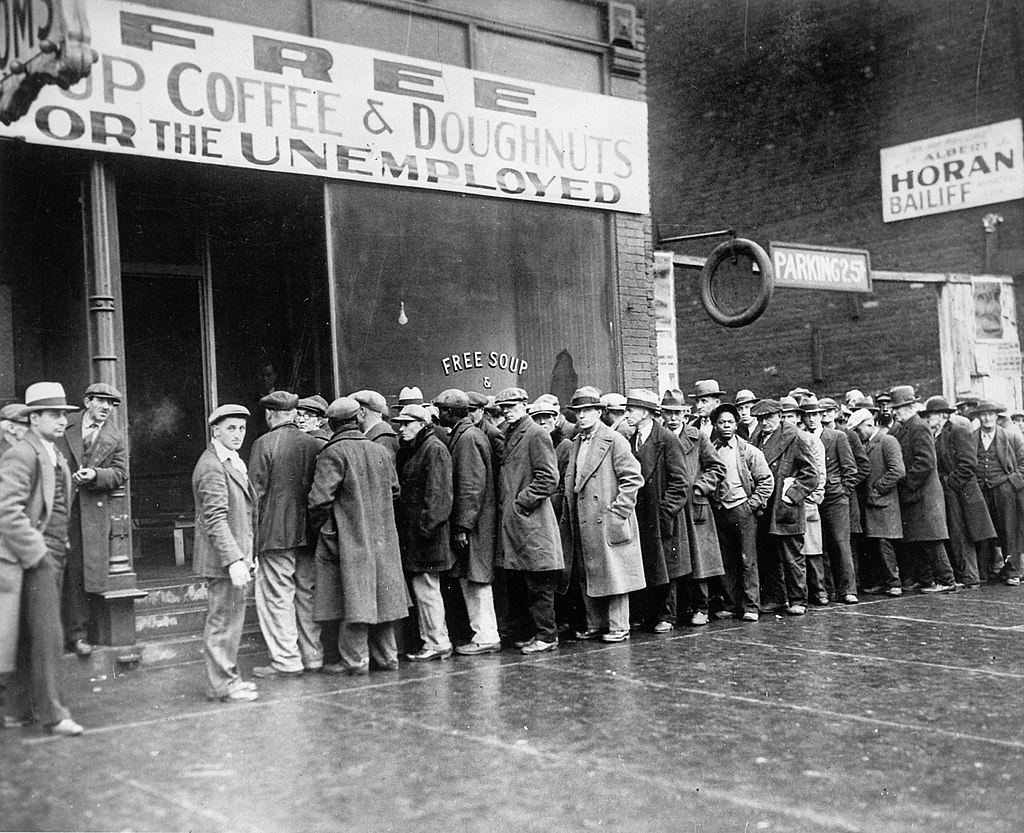
How the unemployed stay unemployed because they do not try.

If you want to catch fish - maybe you need to go fishing.


I had coffee with one of the most successful businessmen that I know in our region. He told me an astonishing story about unemployment.

He said he was asked to speak to a group of local people from a needy neighbourhood about the problem of local unemployment. When he arrived, there were about 50 people assembled to see what solutions he could propose.

He asked how many of them were unemployed. Virtually all hands went up. 

He then asked how many of them had actually knocked on a door that week to ask for work? 

No hands went up. Not a single one.

He then sighed and shared with them a simple plan. He said they could all come by his office where he or his personnel would help them compile a decent curriculum vitae. With this, he said, they were to then go and knock on just one door a day for the next week - and ask for work. After that they could all meet again and see how things had gone.

At the end of a week, the promised meeting took place. This time only about half of the original number was present. The rest didn't bother to show up.

My friend then asked how many of them had succeeded in getting a job that week.

All hands went up.

Every single one, who had bothered to try, had landed a job that week!

He marveled as much at this story as I did myself. We, who are capitalists by nature, simply cannot understand how unemployment is driven by the weak desire to make decisive effort. 

Afterwards it seemed a lot like fishing to me. Life has taught me that there are three kinds of fishermen. 

The first kind of fisherman has a lot to eat because he is up early and goes home late - and puts a lot of effort into fishing, both during good times and bad times. When things go badly, he does not get overly discouraged. He simply keeps on trying until things get better.

The second kind of fisherman has little to eat because he only goes fishing when he feels like it, or when he has a notion that the fishing will be easy that day. 

The third kind of fisherman is always starving because he simply does not fish at all. He is always telling you that the fishing is poor this time of year. The weather is too bad to go out. The sea is too dangerous. Or that he has tried already and the fish did not bite then, so why should they be biting now? 

He will also tell you that he doesn't have any bait, and it is too late to find some now because the tide is not right and the rocks are submerged. Often he will even not go fishing because he will tell you that the best fishing spots have already been taken by other fishermen. Sometimes he will even be resentful towards them, and blame them for his own misery.

For these, and and a hundred other reasons, the starving fisherman will remain starving because he will always be able to rationalize why staying home and doing nothing is the only thing that he can do. 

A wise man, who had experienced both wealth and extreme poverty, once wrote in his autobiography that when you do not have work, you already have a job: It is now your single and sole job to rise every morning and spend six days of every week from morning till night to look for work. That has become your job! Look for work the way you would look for treasure. Put your energy and enthusiasm into it. Fix your appearance and polish your presentation. 

Do what it takes to keep doing your job of finding employment until you have employment - even if it is a bad job to start with. Even the smallest minnow can become the bait by which to catch a bigger fish later on.

Become a fisherman again by spending all your waking hours by the water's side. 

Image: Wikipedia.

Monday, 19 May 2014

The shrewd negotiator and the cake seller

Every businessman knows a story like this one, for this customer is universal. And it is a story that has almost nothing to do with selling cakes at all.


How it started

One day the seller of exotic cakes saw a confident customer enter into his shop.
“I was told you sell the best cakes in the world,” he announced. “Everybody around here says no cake has ever tasted as good as yours.”

Smiling at the compliment, the seller shrugged and answered, “Even if I have to say so myself, we use only the finest ingredients. We employ the most highly trained confectionary chefs in industry. And we do everything with a healthy measure of extra personal attention. We go a long extra mile to ensure that our cake remains the best the industry has ever known because this is our passion. We are here to serve the world with pride!”

“They do indeed look quite delightful,” the customer agreed. “And I can't wait to taste them. But how much does this one cost, for instance?”
The seller named his price and proudly held his cake for all the shop to see.

“Oh you are far too expensive!” the customer cried with an expression of startled disbelief. “If you want my business you’ll have to cut your price and be realistic.”

The supplier sighed as he quietly removed some chocolate and cherries from his cake, before recalculating the the price.
“Not good enough,” the customer insisted. “The seller around the corner sells his for 20% less.”
With a heavy heart the seller scraped some cream off and took several pennies off the price.

“Hmm… slightly better,” the customer grudgingly acceded.
Then suddenly he thought of something.
“Just put some celery on the cake, and then the deal is yours.”
The seller stared at the customer for a moment of confused disbelief. .
“Nobody puts celery in a cake!” he protested cautiously. "I can do that, but I'm sure you will not like it."
To this the customer shot him an accusing look.
“Who are you to tell me what I would or wouldn't like? I know more about cakes than you could possibly imagine. And most of all, I'll have you know that I am the customer and the customer is always right. Have you never heard of such a principle, or are you still too new in business?”
The seller could hardly argue against that, and so with shaking head he put some celery onto the customer’s cake. ‘The customer is always right,’ he tried to remind himself as he reluctantly arranged the celery sticks upon the customer's cake.

Even though the seller knew it would taste awful, the cake certainly looked pretty now, and the customer was quick to point it out and remind the seller that this proves how much he knows about cakes. 
Before the seller could warn about the taste gain, however, the customer loudly added: “If I take a dozen, you’ll have to give me volume discount, won’t you?”

The seller’s eyes clouded over as he realized where the customer was going. His products were made for those with high expectations. They also represented the lowest price that would make superior quality possible.

Unfortunately now there was no polite way to tell the customer that he was not interested in his business anymore. With trembling hand the seller therefore parted the layers of his cake and scraped the filling out as well. His products were all hand-made, of course. He also knew the seller around the corner used pre-mix ingredients and produced them on a factory production line so they could never taste the same. But price is price, and after all, everyone understands a volume discount, don’t they?

When he was done the seller leaned towards the kitchen hatch and asked for a dozen cakes to be brought forth. But right then an urgent hand stopped his action.

“I changed my mind,” the customer smilingly objected. “I think I’ll take just one cake after all. Just to see what it is like before I place a real order.”

With that, he smugly laid his money on the table. He had just succeeded in obtaining a discount on a discount, plus the volume price for one. ‘What a shrewd negotiator am I,’ he thought as he caught sight of his own reflection in the display shelf’s mirror.

With a startled expression the seller looked his customer in the eye. He knew that he had lost. But he did not regret the profit that has just evaporated. Even as he slipped  the case inside its box, he knew that he had lost the one thing that he valued more than money – his reputation as the best confectioner of the century.

A week later the same customer looked into his store again.

“I’m just here to tell you,” he sourly announced, “that the your cake really tasted awful. It was dry and flavourless, and there was nothing in it that made it special. Also, the balance of flavours was really very off. I don’t know what you do in your recipes, but you certainly could use some help from someone who knows more than you about baking. Furthermore, you really would do well to learn from your competition around the corner if you want to see how business should be done. You should try offering some value to your customers, you know? Walk the extra mile, sometimes. Don’t just sell a heap of sponginess. Put some cream and cherries on top. That’s what everybody does with cakes like these.”

As if to punctuate his disapproval further, the customer squinted sternly, and then summed up his protest by adding, “I don’t know what everyone was going on about, because your cake has nothing worth recommending at all. In fact, I am here to let you now that I will never buy another cake for you – and I’ll be sure to tell my friends as well.”

For a little while the seller contemplated sadly saying nothing.
But just as the customer was about to leave his store, he quietly asked a question: “So have you bought any of the man around the corner’s cakes lately?”

The customer hesitated for a moment, and cast a frowning look.
“Of course,” he lied. “And they taste far, far better than yours...”

The sequel

A few weeks later the same customer was visiting a friend, who served him the most amazing cake he had ever tasted. When he enquired where it came from, he was surprised to hear that it came from the same seller whose cake he had found so flavourless.

“I don’t know what I have such rotten luck,” he finally declared. “Wherever I go, I always get the worst of cakes. I get the worst of service and the most shocking consumer experiences. I guess you were just lucky. Don’t I ever wish I had your luck in life…”

The moral of the story? If you find a product vendor that prepares his products with the greatest care, pride and who visibly pays attention to fair pricing as well - be careful of negotiating all the value out of it. Unhappy customers are frequently those who make sure that all the cream and cherries gets scraped off before the take their purchase home.

Wednesday, 30 October 2013

Complaining people are unhappy people


Yesterday a customer rang me up to give me a very long and rather emotionally-pitched lecture. She said our service is "absolutely shocking." She said in stead of owning up we are covering up. She hinted twice that I have been lying to her. And then she urged me - as she had done on previous occasions "to seriously take a course in customer relations management."

I suppose we could save money on course fees by simply following her instructions. After all, she has been telling us how we ought to run our business since before she even became a customer. Inexpensive consultancy has never been so cheap before.

I don't think anyone could have pleased her anyway. But still, such calls are upsetting - especially if you yourself are a believer in high service standards.

Then there came the irony. An hour later I was on the phone with another customer. She, on the other hand, kept telling me how great we were and how she would do business with nobody else and that she is always telling everyone how good we are.

One service, two people, two perceptions. It is impossible, of course, that both of them can be right. So which one do you think is wrong?

I walked around with that woman's conversation in my mind all day. I was searching for the fatal flaw in our service. There is always something that could have been done more perfectly, but that's not the main thing that I was looking for. I was looking at what the common denominator was that made this one person so desperately unhappy. Why, out of several hundred customers, should there always be two or three that are unshakably convinced that they are recipients of the worst of service? I mean, they do not make up these feelings. They really and truly believe what they feel is reality.

Then I remembered the story of the nun:

A young nun once joined a convent which was run by a Silent Order. Upon her admission the mother superior informed her that whatever happened, not a word might be spoken within those walls, unless it was said with her permission. A year later the mother superior summoned the young nun to tell her that since her conduct had been so exemplary for a whole year, she would be permitted to speak one word.
The young nun thought for a moment and then shyly said: "Cold..."
The mother superior nodded sternly and then dismissed her to her room.
Another year passed until again the young nun was called in and permitted to say a word.
"Hungry...!" she whispered, with a desperate plea in her lonely eyes.
With a disapproving frown the mother superior waved her off and shut the door.
In this silent way another year slowly passed. For a third time the nun was brought before the mother superior.
"In recognition of you having been here for three whole years," the mother superior sternly said, "I will now permit you to say two whole words. You may speak them now."
The young nun hesitated for a moment, then took a deep breath and said: "I quit!"
For a long time the mother superior surveyed the girl before her and then sighed with resignation.
"I suppose it's for the best," she said. "You've done nothing but complain ever since you came here anyway..."

In my life I have known a lot of unhappy people. I have also found that unhappy people tend to be distinctly critical people. They are complaining people. They proudly approve of good service, not in a grateful manner, but merely recognizing it as being their rightful due.

They energetically seek to identify deficient service, and seek to make a contribution to the advancement of civilization by highlighting it. They draw up petitions. They write letters of complaint. They phone heads of corporations to give them a motherly earful. They keep files of all their correspondence with customer complaint departments. They tell kids and young mothers how they ought to be conducting themselves. They lean across post office counters and lecture clerks about their company's policy. They are the ones that will hold up drinking glasses to the light to make sure that there are no dirt marks on them. And if their should be a single fly in a million gallons of soup, they are likely to find it. They make sure to collect all the evidence. They try to do mankind a favour by bringing it to the attention to the whole world who might not have noticed. They are, after all, the self-appointed guardians of standards and good order.

It is funny how complaining people tend to be perpetual victims of plots and conspiracies, always on the receiving end of never-ending episodes of extortion and misfortune. How is it that these poor souls should always be so dreadfully misused in every way?

So the nun eventually quit the convent - and I do indeed feel sorry for her. But few would argue that she was better off by doing so in any event. In my case, I politely suggested that my complaining customer might be happier by using someone else's service.

"No, I have never had a problem with your product," he retorted. "It's just the shocking way that you people conduct your business..."

I also sighed with silent resignation. If only our service had been worse, perhaps this customer would have quit as well. That, after all, is the kind of customer I would dearly love our opposition to have.

Wednesday, 20 June 2012

My Amazing Note from China


What a valuable lesson I learnt from a stranger through a loss making transaction


There are those that buy things and sell them at a profit. Most of the world does business this way. They just handle inventory and make sure that they get rewarded for the changing of hands. But then there are those very few beautiful souls who have turned business into an art form. I came across someone like that two days ago.

My pen from China - with Cindy's note
All my friends know that I’m inordinately fond of fountain pens. Essentially I have only used fountain pens since I was 15 years old. And as it goes with life long passions, one always seems to be after the perfect instrument. In this case, the perfect pen. It so happened that I chanced to come across a nice-looking fountain pen on Ebay a while ago.

It was seconds before closing time and nobody had made a bid yet. I took a chance and entered my bid – mostly out of curiosity, I suppose. And so it came that I bought myself a nice new fountain pen for – all of one US cent. Yes – US$0.01 – or less than ZAR8c in our own money. When shipping cost of US$4.98 was added, the total came to US$4.99. What could I have bought for that kind of money in South Africa? A hamburger, if I was lucky. Or a dozen free range eggs maybe.

I could not believe my luck. This, for a heavy, exceedingly well-crafted pen with a suction cartridge and a nice golden nib? Too good to be true, you might think. Well so did I. But on Ebay a gentleman’s word is his bond, plus my curiosity had to be satisfied. And more than anything else – a deal is a deal. Accordingly, I paid the money and waited.

Mail from China normally takes about three weeks. But in this case we had a postal strike so I knew it was going to be long – if the package arrived at all. Yet, sure enough, two months later it was in the mail. South African Customs made me pay R15,00 for it.  We all know the feeling – when you must pay US1.88 tax for an item that cost US0.01 then there is only one way to put it – you have just been raped by your own government.

But what can you do? Caesar must also live, even if by means of immoral gain. I therefore paid the ransom and curiously opened the package. And there it was – not quite a Mont Blanc, to be sure. But still – I was exceedingly satisfied. It felt like real quality and wrote beautifully. Now, in the world of fountain pens, each pen has a soul and a character. Like a woman. Each one is unique in the way it handles and writes. I thought about my new pen and decided, if this one was a woman, it would have been Marlene Dietrich. Smooth and sophisticated right to the tip.

The next morning I woke up in a foul mood. I was in a hurry to tidy up before leaving for work, but just before I threw away the box that the pen had shipped in, something caught my eye. Inside the package was a small note – intricately folded in origami style. When I carefully unfolded it, I saw that it was a hand written message. And there – in the neatest Western handwriting, were the following words:

“Hello dear friend. Thank you very much for your purchase!

I’m so glad that the item reached you finally. Hope it did not keep you waiting tooo long. Your purchase really a big support on me and give motivation to make me keep offering best products and service. Thank you very much again!

If there is any problem make you unsatisfy with the transaction please contact me and give me chance to solve it. And if you satisfy with it please leave me positive feedback.

Thank you very much!

Best regards
Cindy
Share. Enjoy”

In neat Western handwriting, her words were written
Now I really must say – I had been in such an annoyed mood right up to then. But at that very moment, it felt as if the sun was shining into Africa all the way from China. I realized something very important then. For one US cent, this surely must have been a loss making transaction for a Chinese small business. There was no way they could have shipped that product economically. Surely most businessmen around the world would have sent the product with sour reluctance. Some would even have looked for justification not to send it at all. And yet, here was one who honoured a commitment not only with dignity, but with joyful pleasure.

How often would you encounter that in life?

In life, there are so many things we do simply because we have to. We have to buy something and sell it at a profit in order to make a living. We think nothing of the process, but rather treated as the necessary protocol that we have to hurriedly follow in order to collect our money so we can spend it.

But we forget that sometimes the little things we do can have a big effect on the lives of others. In my case, it was an event that gave me a smile that lasted all day long. I told all my colleagues this story at work – and showed them the note. I and then I decided to tell the world.

So every time I use this pen, I will remember among the 1 billion people who live in China – there is one person whose name is Cindy – who has taught me something about business, and caused the sun to break through on the other side of the world when it was just another cloudy day.

Yes, I will remember Cindy – and I will remember her business at http://stores.ebay.com/shareenjoy . Business is about business for the most part. Yet most of all, business is about people. We must never, ever forget that.

Wednesday, 23 May 2012

"My goal is to be a rock star. And my backup to be be an astronaut"

Reality should never be be the enemy of dreams

Yesterday I stumbled across the listing of a 15 year old boy on the website of a US adoption agency. The description stated that his "vocational goal is to be a rock star, but his backup plan is to be an astronaut." 

I read it again. Slowly. All night and all day long now his words have been playing over and over upon my mind. It gave me several emotions from sadness to excitement. But more than anything else I felt deeply pleased to hear those words. I recognized the language of big dreams. And the language of dreams is spoken by the rarest of men. In fact, the language of dreams is often spoken most fluently by the young. And we should listen to that voice as often as it is heard - for it is the voice that shapes the future.

Once upon a time almost all of us had big dreams. Fireman, pilot or astronaut - there was a time that you and I had every conviction that this dream would become reality one day. But as the years pass, things change. Surrounded by the examples of men who have given up before reaching their goals, we start to water down our dreams. Diminishing our goals. Miniaturizing our beliefs. We grow older and more cautious. We listen with close attention to the caring voices of those who had long since abandoned their own hopes.

They who show themselves so helpful to protect us against disappointment and disillusionment by cautiously reminding us to rather pick more reasonable dreams. Achievable ones. Sensible dreams that will more properly fit into the moulds of mediocrity. "Your dreams are false," they argue. "They are not real," they whisper. Those are the voices we hear the most. And in time, those are the voices we end up believing.

There is a story about diamonds that I was once told. It was about a man who grew up on the border of Lesotho. Over the years, the mountain inhabitants often brought brilliant stones from the mountain streams to his family - believing that they were diamonds. His father knew that diamonds were harder than almost anything. And so, to test whether they were real or not, he used to smack them with a hammer. In this manner, without fail, every single stone was crushed to powder.

Only many years later, when this boy saw some of the most exquisite diamonds in South Africa coming from those same mountains, did he realize that many of those diamonds had probably been real. For hard though they may be, even diamonds shatter between the cold steel of a hammer and the hard iron of an anvil.

This to me, is how it often is when seemingly unlikely dreams are shattered beneath the deadly hammers of preconception. And so, one by one, most people end up dropping the diamonds of their dreams into the molten lava of disbelief. Just as if someone had convinced us them that they were in actual fact never real diamonds, but merely ordinary fragments of glass. I could not help but wonder how many good dreams have been  lost in this way across the ages? It must be millions without number.

At what point then, do most of us abandon our dreams? At what point do we believe the voices that tell us to walk away from dreams that are too big? For example, one must grant that indeed, the odds of actually becoming an astronaut are small. Some might say minuscule. I believe that the odds of becoming an astronaut are 1 in 320 million. These odds are very nearly the same as winning the California lottery.

But as we all know - more new astronauts go to space every year. And somebody wins the lottery all the time - however small the chances. Clearly there are always those who dream about seemingly impossible things, who nevertheless still attain them in life.

I know of one such man. The biggest dreamer of them all. And the owner of more diamonds than anybody who had ever lived until his time. Some thought of him as the king of diamonds. But I think of him as the king of dreams. He it was, who used to say, "I measure a man by the size of his dream." I would take those words seriously from a person who started with nothing and made himself into one of the richest men in the world.


"I dream in continents," he told his friends. And that, indeed, he did. Quite literally so.

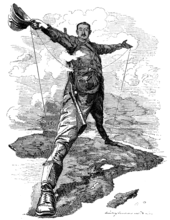
To those who knew him well enough, Rhodes was a scoundrel by every unit of measure. But he also set the benchmark for marrying unlikely dreams with ultimate reality. However lacking his character might have been at times, there is a lot that we can learn from his spirit.

Cecil John Rhodes - one of the biggest and most successful dreamers who ever lived.
Like so many other great men, he had a humble origin. Cecil Rhodes began his life as the somewhat sickly son of a British parson. He came from the bottom end of a large family. He was not an overly gifted scholar. He did not really excel at sport. And even his social skills were limited, for he he had a squeaky, almost girlish voice. Neither did he come from wealth or class. In fact, his life seemed destined to mediocrity.

He was already flowing into the mould of ensured social insignificance, but for one important thing that happened to him. His doctors advised him for the sake of his health to relocate to South Africa. And so it was decided to send him to the other side of the world in order to attempt to prolong his life.

In 1871 he arrived in South Africa. He was, as one author described him, "a tall, lanky, anaemic, fair-haired boy, shy and reserved in bearing." And he was still a mere boy of only 17 years old. To all reasonable expectations, young Cecil should have had a life of perfect insignificance. In fact, the farming venture that he attempted with his brother soon turned into failure.

But in this fateful decade South Africa had become the country of dreams. To dreamers and adventurers around the world, this was the land of golden opportunity. A land of mineral rushes unlike any the world had ever known. And it was one of the fewest places on earth where a nobody could have the hope of becoming a somebody with just a little bit  of luck and a lot of hard work.

Young Cecil's experienced many serious setbacks. But he never gave up trying. His wanderings eventually lead him to the diamond rush of Kimberley. In stead of finding rivers of diamonds here, he discovered thousands of men who already had a head start on him. Men much cleverer than he. Much older and stronger. Vastly more experienced. Far better equipped to survive and prosper in a cruel world where one man would step onto his neighbour just as sure as a hungry dog would eat another. What mattered most, however, was that Cecil had one thing that was bigger than any other man - the size of his dreams.

What followed in Cecil's life reads like a story book. In his relatively short life, the unassuming boy from Hertfordshire consolidated the mad world of Kimberley into the biggest diamond company in the history of the world. He founded and directed one of the greatest gold mines on the planet - still producing gold over 120 years later. He even had a country named after him. He floated companies, founded industries, determined the course of history, and either built or destroyed the lives of tens of thousands of men, women and children.

He, who had no special education, went on to obtain an Oxford degree. He then became the Prime Minister of the Colony of the Cape of Good Hope. He became the friend of monarchs and the partner of international bankers. These achievements would have satisfied even the most ambitious men. But Rhodes' dreams were bigger yet. All of these were merely stepping stones on the way to his real dream: that of building a railway from the Cape to Cairo - and then to go on to unify the entire English-speaking world into one great empire. And after that, his dream was to unite the world under the British flag.

In fact, these were not just fantasies. To Rhodes they were real. Because, as he once told his friends, his dreams are backed with plans. "There is a difference," he insisted.

It is an irony of history that Rhodes did not live to realize his ultimate dreams. But it did not matter. He came further than much more talented men could have reached in generations. He, who had once been given only 6 months to live, died at the age of 48. His dying words were, "so little done. So much to do."

There are many reasons why Rhodes came so far in life. But in my mind, one of the most important was the fact that he dreamed bigger than all, and remained child enough to believe in the reality of every one of his dreams.
Mark Twain once said that where Cecil Rhodes stood in the Cape, his shadow fell across the Zambezi
Rhodes had been brought up to become a parson like his father. Or a barrister, if his mother had allowed it. But destiny pointed him onto a different road. On that road, Rhodes ignored small ambitions. He paid attainable goals little attention. In stead, he chose only the biggest of dreams, and never allowed himself to be convinced that they were impossible to reach. He never tested diamonds with a hammer. He tested them with light - and if they sparkled - he kept them for his treasure.

Lesser men would have kept their dreams private, for fear that others would laugh at their size. But not Rhodes. Just as he was never shy to show his treasure of diamonds, he was never shy to share his dreams with anyone would might admire their glitter. And indeed, many a friend did tell him that his dreams were unrealistic. That someone in his position had no hope of reaching them. Rhodes did not listen to small men. And he never allowed the voices of doubt to cloud the light of his dreams.

And so I think back at the boy who would be a rock star. I may never meet him. But we all meet boys and girls who are like him. For my part, I choose to believe that boy will become a rock star. And if not a rock star, then an astronaut. And if not an astronaut, then I hope that he will still reach whatever dream he sets his mind to. Because dreams are the reflection of reality to those who have the faith to believe in them.

My choice does not have to be a rational one. I'm a believer in dreams. We dreamers speak differently.

Credits: 
All images by courtesy of Wikipedia
Astronaut image: http://upload.wikimedia.org/wikipedia/commons/thumb/f/f9/CecilRhodes.jpg/170px-CecilRhodes.jpg
Portrait of Rhodes: http://upload.wikimedia.org/wikipedia/commons/thumb/e/ec/Punch_Rhodes_Colossus.png/170px-Punch_Rhodes_Colossus.png
Rhodes the Colossus: http://upload.wikimedia.org/wikipedia/commons/thumb/8/88/Astronaut-EVA.jpg/250px-Astronaut-EVA.jpg
Friday, 9 December 2011

Do you know the amazing power of FREE?

A tribute to Netscape Navigator - a superior product who practically vanished in time because it did not realize the amazing power of Free

Here is a story, in which the characters will only be remembered by older internet users.

Once upon a time, not so long ago in a world before this one, there used to be two internet browsers. One was called Internet Explorer and the other's name was Netscape Navigator. Both were required to browse the internet, and soon there was a struggle for world domination between them. That was how the world's first browser war began.

As the battle raged, the creator of both browsers fought back hard and bitterly on all fronts. Netscape Navigator was often considered to be the superior of the two products, but in price and functionality the two were in a deadly race, made more difficult by the fact that the two products were roughly similar.

But then one of the two contestants pulled the ultimate trick: it made its product free. The effect was that of detonating an atomic bomb on a medieval battlefield. It simply wiped out the opposition within months. Who can ever win a sales war if the opposing party is giving its product away at no charge? By the time the court cases were over, it was too late already. Internet Explorer emerged the undisputed winner, and it remains the world's dominant web browser to this day. It wasn't the better of the two products. Only its business model was. And that's all that counted.

As for Netscape Navigator - when was the last you heard its name? Probably not in a long, long time...

This little story already illustrates the amazing power of Free.

But there are more facts to consider: How much does Google charge for a service which has streamlined the internet beyond comparison? The answer? Nothing. How much does the most popular social media service of all time - Facebook - charge for hours of entertainment? Nothing at all. The same goes for MySpace, and Twitter.

Or what about one of the world's most popular email service, Gmail? And have you considered the incredible amount of content that millions of users receive via YouTube or the unbelievable magic of Google Earth and Skype? What do these companies charge for their immensely useful content? You guessed it. Nada. Zero. Zilch. One hundred percent nothing!

But have the companies behind these services made millions, or even billions of dollars? The answer to that question is an unhesitating yes.

So how is it possible that businesses can make oceans of money by giving things away for free?

The answer to that question lies in the simply fact that they create revenues streams that accompany the main benefits that they give away for free. Historically, this kind of an economic model is rather rare. But not entirely. In a way, it as always been practised. And the proof of it can be found from any fisherman who will tell you: if need bait if you want to catch fish. You need to give in order to get. And if you want to get much, you have to be prepared to give a lot.

The question then is, can you think how your business can use the amazing power of Free?

Perhaps your business cannot benefit from the power of Free, but I do suspect that that kind of a business would be a very rare one indeed. It may not be practical to give away luxury cars for free, which would run on a proprietary fuel, from which the manufacturer would over time make much more money than he would ever make from mere car sales.

But there is a principle involved. Can you see that at least? If you can, then you may just be holding the key to your next million - or billion.

In our company's case, we deliver future technology to today's world. But in our industry, as in many others, there is also currently a war raging. It is called the "Bandwidth war." Everywhere in the world internet is getting faster and cheaper as different service providers are continuously forced to try and outdo each other in a competitive market.

So we have to ask ourselves - in dealing with a commodity of constantly declining profit, what will happen when somebody figures out a way to give away bandwidth for free? Or, as often happens, at a price that is so low that it is almost free?

Sometimes it is easier to predict the outcome of wars than people might think. And we believe that the outcome of his war would be something along the line of internet that costs so little that it is almost regarded as free. We are already planning of that world today. The power of Free can be your enemy or it can be the difference between owning a mill or owning a market. In the end, it is every  business' own choice whether he wishes to make use of the principle of free or not. Free is fun, but it is not for the feint-hearted.

I wonder how many people have ever thought about it this way.

Wednesday, 7 December 2011

The success story of how one maths teacher changed the lives of many

How one South African school is bringing the benefit of first class maths tuition to less sophisticated schools, using standard technology

Nobody can deny that mathematics is a key that unlocks some of the greatest career possibilities in the world. A good mathematical grounding can literally be a ladder to sky: the better the understanding, the more rungs in your ladder. The more rungs, the higher you can climb. And the higher you can climb - the more stars you can pick from future worlds.

Stars are like diamonds. And diamonds are money.

So how seriously is maths taken in schools? The sad answer is - not very. Unfortunately mathematics is often regarded like taking your car for a service. It is merely the unpleasant thing you have to go through in order to get good results further down the road.

Like millions of other kids around the world, I was in a good school who battled to get good maths teachers. And so for years we were taught maths by frustrated biology teachers, physical education teachers and even a language teacher. For the most part, these substitute teachers had very little love or appreciation for the beauty of mathematics, struggled to understand it themselves, and certainly did not manage to instil any kind of passion in us.

It stands to good reason that as the years went by our results became less and less inspiring. By the second-last year of school our results were in tatters. We had sunk to a hopeless depth. We were tired, uninspired and despirited. Mathematics had become a slow-motion nightmare from which we saw no escape. It was a quicksand of despair which was in the process of sabotaging our career dreams.

In my last exam I scored 37%. It looked hopeless.

But then something changed. Only about one in 2,000 oysters contains a pearl. And among a hundred teachers, there always seems to be one that is different. In my last year it was our good fortune to end up with such a teacher. Her name was Riana van Heerden - a very small, soft-spoken woman with a soft heart and an iron will.

When we walked into our classroom that first day, she told us these words that were inscribed on my mind:

"I know your records are dismal and that you probably have no hope of passing your final examinations. But I will make you a deal: If you do everything I say, and work very hard, then I will make sure that you will pass. Whatever it takes, you will pass mathematics - and you will very likely do well too. But I must warn you - you will work harder than you have ever worked before in your lives."

I never forgot those words. They haunted my mind for months as the last year of high school dissolved into endless nights of homework and extra classes. When the final examinations drew closer, we had done practically every exercise in the very thick standard issue maths handbook. We also did all the exercises in the old one from previous years. We had done all the exercises in all past examination papers. We did more exercises from other textbooks. And then we did some that the teacher invented herself. We did them all.

By the time the final examination dawned, we were more ready for it than for any other subject in our entire lives. Every problem seemed like an old friend - we recognized its type and nature, smiled, and solved it with quiet confidence. As far as I know, we all passed mathematics with exceedingly good grades. We walked out of school with grades that yielded bursaries and unlocked careers.

In one year one teacher took us from a class of spectacular losers to a class of impressive winners. Even those who had no mathematical talent at all.

And she taught us a lesson which has guided and shaped my life ever since: you can achieve almost anything in life - if you are prepared to work hard. But you may just have to work a lot harder than you can possibly imagine.

What this has given me over the years, is an unshakable belief that the unlikely is possible to those who believe. It is a matter of will, more than a matter of ability. It has enabled me to take on bigger challenges in life with self-confidence, because of that one lesson.

But she did more than that. By giving us a solid grounding in mathematics, she made it possible for us to become what we dreamed of becoming. How many people can claim to have dramatically changed the careers and future lives of a child?

This was my story. But every school has its own story. Most children still suffer with maths. And many teachers even struggle to either fully understand mathematics, or to teach it effectively and in a away that will inspire.

When I was at university a professor of hydraulic engineering made us first do exercises with chemical calculations. We could not understand why we had to do chemical calculations in a first year physical engineering class. His explanation was: I want to see if you understand the principle of percentages. Not one of us did. The system was trying to build walls where there were on foundations.

What the professor tried to show us, was that there are principles of mathematics upon which the entire universe is built - even life itself. If you understand the principles, then there is so much less you have to learn in life. You can figure a lot of it out yourself as you go along.

I have been in technological careers all my life. I have since seen that that everything in life is underpinned by mathematics: work, business, banking, personal finances. To the extent that children are equipped with good mathematical backgrounds, their lives can improve. Poverty can become prosperity. Struggling countries can become winning nations. And ailing economies can be made robust again.

But what do you do if only 1 in 100 teachers are unusually gifted in passing on the knowledge and inspiration of mathematics? The answer lies in technology. Today technology enables that one in a hundred teachers to be cloned and shared with dozens, or even hundreds of classrooms around the world. Through the use of video conferencing technology, a teacher like I had could rescue the grades, and turn around the lives of many other young minds.

Fortunately that kind of technology is already in use, it is affordable, and it is effective. And companies such as ours are excited at being able to help deliver it to school and learning institutions. Because that is the way to connect this world with the future, one bit and one byte at a time. Today a child can sit in a rural farm school classroom, and ask a question to a live teacher in another city. And a hundred other scholars in five other schools can benefit from the explanation given by the teacher.

With smart technology, the teacher can save the whiteboard solution with the click of a mouse, store in in the Cloud for future download, email it to her students, or let them copy it on flash disks. At home these children can replay the solution one step at a time - and refresh their minds to the logical progression of problem solving.

This is the future today. And for schools to have it now is not a matter of ability. It is a matter of will. All they need to do is ask for it. It may take a little bit of work and planning. But that was the lesson after all - almost anything is possible if you are prepared to put in a bit of work.

An example of how a maths lesson could be delivered with standard technology in use today. This is the kind of tools I wish I had when I was a kid.


How British schools are outsourcing maths tuition for better results

Further reading:
South African teachers battle to understand maths.
How online teaching is changing lives